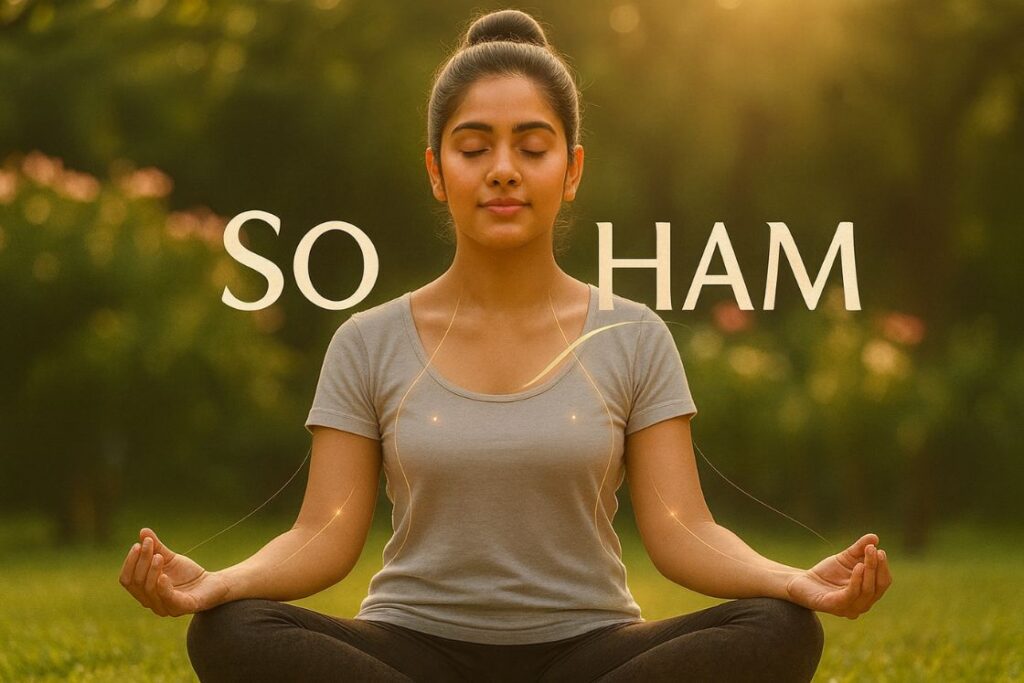
During meditation, chanting a mantra helps centre the mind and stay focused on the practice. Ancient texts of Hindus, Buddhists, and Sikhs mention many mantras, yet most people are either unaware of their meaning or unsure of their pronunciation. Traditionally, a mantra was received from a guru, but that is not always possible today.
Soham is one mantra that anyone can practice mentally, without worrying about pronunciation or initiation. It is considered one of the greatest mantras, often placed on par with Om. Many teachings describe Soham as a natural expression of Om, and it is widely used in Kriya Yoga and Tantra Yoga.
Soham functions similarly to mindfulness meditation used in the West- both help you stay present, reduce stress, and improve breath awareness. The difference is that Soham connects this awareness to the deeper meaning of the mantra.
Before learning the meditation method, let us understand the meaning behind the word Soham.
Meaning of soham
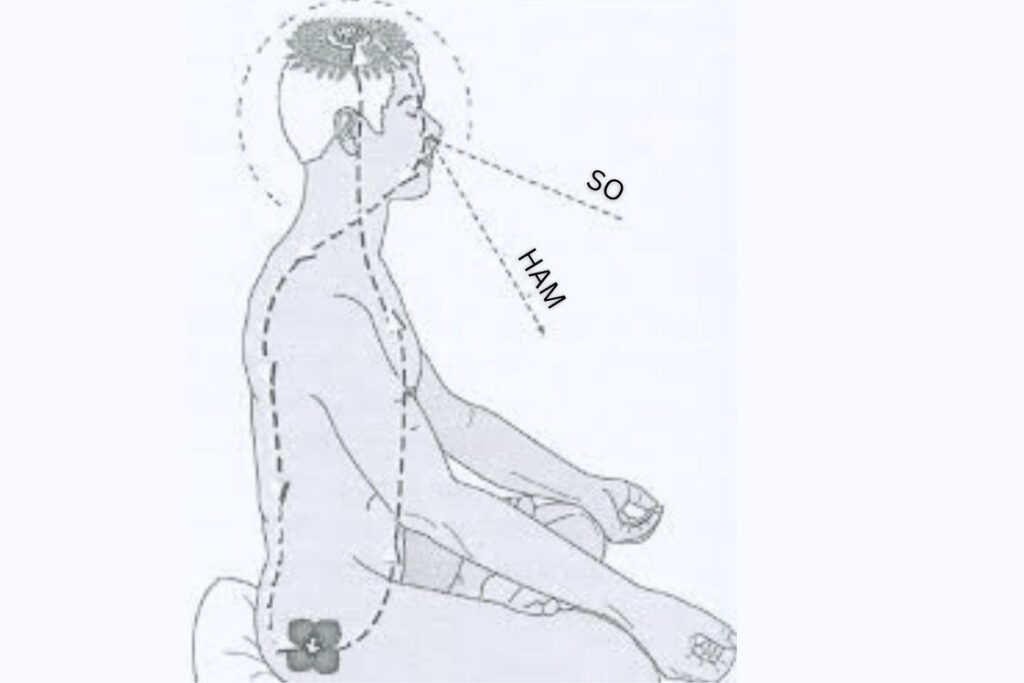
The word Soham translates to “I am He/That.”
- So = “He/That” (universal consciousness)
- Ham = “I” (the individual self)
When you mentally repeat Soham, you acknowledge that the individual self and the divine are one. The divine you may search for outside already exists within you.
Soham is also the natural sound of breathing:
- “So” during inhalation
- “Ham” during exhalation
This makes Soham a universal mantra because its vibration is present in every breath. Anyone can practise it without initiation since it already resides naturally within the body.
Soham is also known as Hamsa or Hansa. Hamsa is simply the reverse of Soham, carrying the same meaning.n as Hamsa or Hansa. Hamsa is simply the reverse of Soham, with the same meaning.
Also Read: 7 Powerful Mantras to Chant During Japa Meditation
What is soham meditation?
Soham Meditation is the practice of mentally repeating the mantra Soham while synchronising it with the natural rhythm of your breath. When the mind wanders, you gently guide your awareness back to the breath and the mantra.
This practice is also known as Ajapa Japa Sadhana.
- Japa means repetition of a mantra.
- Ajapa Japa means the repetition becomes effortless and internal- it flows naturally without force.
Soham fits Ajapa Japa beautifully because its rhythm matches the rhythm of breathing. Through this practice, you acknowledge that the divine or Brahman exists within you. It helps develop awareness, steadiness, and presence in the moment.
How to do soham meditation
This meditation is simple and intuitive. You synchronise the breath with the mantra So-Ham.
- Choose a quiet and comfortable place. Sit in any meditative posture of your choice.
- Prefer sitting rather than lying down. You may sit on a cushion or chair if needed.
- Keep your spine upright with head aligned to maintain proper posture.
- Rest your hands in Gyan Mudra or another mudra of your choice.
- Close your eyes and take a few normal breaths to settle your mind.
- Observe your natural breathing — notice the movement of the chest and belly.
- Now, mentally repeat “So” as you inhale and “Ham” as you exhale.
- Do not force the breath. Keep it slow and diaphragmatic.
- If the mind drifts to thoughts, emotions, or sensations, gently bring it back to breath and Soham.
- Practice for at least 10 minutes. Use a soft-timer if you prefer.
- When finished, deepen your breath, move your fingers and toes gently, and open your eyes slowly.
Optional visualisation
- Before beginning the mantra, visualise a soft white light around you.
- Feel it protecting you from external distractions, helping your mind relax.
Safety Note
Soham meditation is safe for most people when practised gently. If you have a medical condition such as anxiety disorder, respiratory issues, or PTSD, practise slowly and consult a qualified professional if unsure.
Who can practise soham meditation?
Soham is suitable for:
- Beginner meditators
- Yoga practitioners
- Students seeking focus
- Professionals handling stress
- Anyone seeking spiritual grounding
Its simplicity makes it accessible to every lifestyle and culture.
Also Read: How to Practice Heart Space Meditation
Soham meditation benefits
Soham meditation increases awareness, rests the mind, and deepens your connection with breath. The key benefits include:
- Improves attention and working memory – A brain imaging study found that Soham meditation changes neural activation involved in attention control and working-memory performance.
- Reduces stress and emotional imbalance – Mantra-based practices (including Soham) are linked with reduced stress, anxiety, and negative emotional states, supporting better mental health.
- Enhances mental clarity and cognitive control – Reviews of mantra meditation techniques show improvements in cognitive flexibility, self-regulation and fewer distracting thoughts.
- Supports better sleep quality – By calming the nervous system and slowing the breath, Soham meditation reduces restlessness and may promote deeper, more restful sleep.
- Strengthens mind–body connection and self-awareness – Soham (or similar mantra + breath practices) improves awareness of bodily sensations, presence, and inner calm.
- Promotes physiological balance (nervous system + breath) – While direct Soham studies are limited, broader meditation research shows improved autonomic balance, reduced stress markers, and healthier breathing patterns.
Conclusion
Soham meditation aligns the mind with deeper reality, supporting spiritual and practical well-being. It calms stress, improves focus, promotes emotional balance, and cultivates inner peace. Because it is breath-based and completely natural, Soham is suitable for both beginners and experienced meditators seeking clarity and connection.