
Many people feel drawn to Kundalini Yoga because they are searching for deeper balance, clarity, and inner growth. At the same time, beginners often feel unsure about where to start. Questions like “Am I ready?” or “Is this safe for me?” are very natural.
Traditional yoga gives a clear answer. Before working with powerful inner energy, the body and mind must first become steady and balanced. This preparation is not rushed. It begins with Hatha Yoga.
Hatha Yoga is not a lesser or beginner form of yoga. It is the essential foundation that prepares the body, breath, and energy system for deeper practices like Kundalini Yoga. Without this foundation, inner practices can feel unstable. With it, the journey becomes smooth, grounded, and supportive.
This article explains how Hatha Yoga prepares the system step by step and why it is placed before Kundalini Yoga in traditional teachings.
What does hatha yoga really mean?
Many beginners think Hatha Yoga is slow movement or simple stretching. This idea comes from modern usage, but it does not reflect the traditional meaning.
In classical yoga, Hatha Yoga means balance.
The practice works with two main aspects of our system: the body and the mind. These two are connected through prana, the life force that moves within us. When the body is tense or weak, prana becomes disturbed. When the mind is restless, prana is also affected.
Hatha Yoga brings these parts into harmony. Through steady postures, conscious breathing, and awareness, the body becomes stable and the mind becomes calm. As this happens, the flow of prana naturally becomes smooth.
This is why Hatha Yoga is not only about flexibility or strength. Its real purpose is to create inner balance. Once this balance is present, deeper yogic practices can be approached safely and with clarity.
Why prana is important before kundalini practice
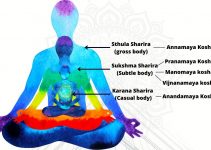
In yoga, the human system is more than just muscles and bones. Between the physical body and the mind lies the pranic system. This is the layer of vital energy that supports movement, breath, and thought.
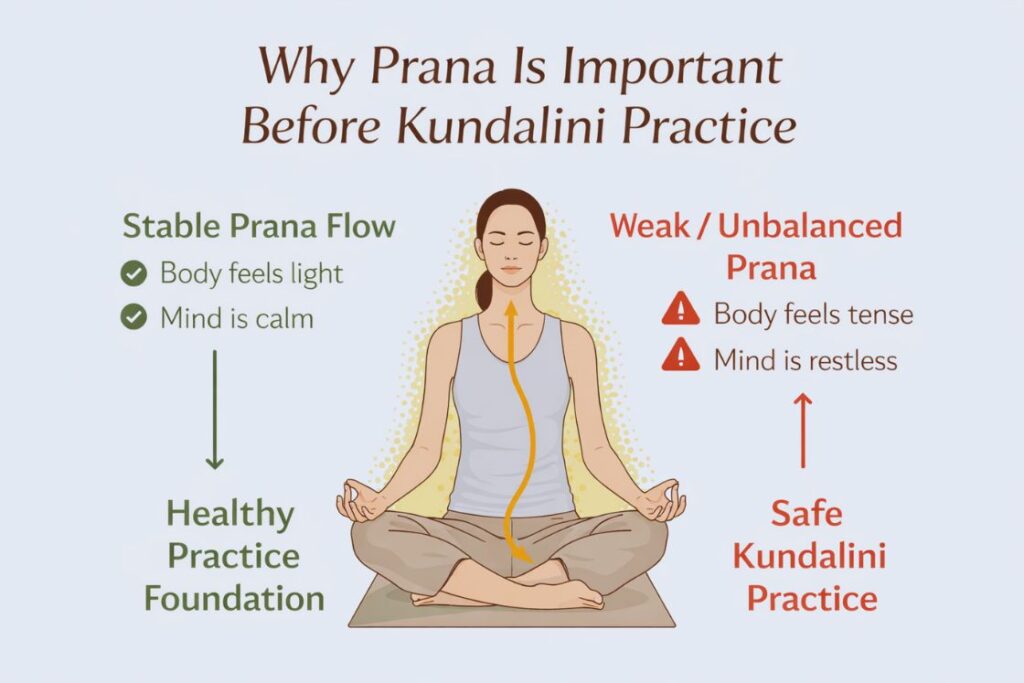
Prana acts as a connecting link. When prana flows smoothly, the body feels light and the mind becomes calm. When prana is disturbed, the body may feel tense and the mind restless or scattered.
Before Kundalini Yoga is introduced, this pranic flow needs to become stable. Kundalini practices work directly with energy, so if the pranic system is weak or imbalanced, the experience can feel uncomfortable or confusing.
Hatha Yoga prepares this layer gently. Through regular practice, prana becomes balanced and steady. This creates the inner support needed for deeper practices.
In traditional yoga, this step is never skipped. A balanced pranic system is seen as the doorway to safe and meaningful inner growth.
Why kundalini yoga needs preparation
Kundalini Yoga works with a powerful inner force. Because of this, traditional yoga does not treat it as something to begin casually or without guidance.
Before Kundalini practices are introduced, the body and energy system need to be ready. Preparation helps the system stay calm, stable, and grounded while working with deeper energy.
Hatha Yoga provides this preparation in a natural way. It strengthens the physical body, smooths the flow of prana, and steadies the mind. When these three aspects are balanced, the system can handle stronger inner experiences without strain.
Without preparation, practice may feel overwhelming or unsteady. With preparation, the same practices feel supportive and clear.
This is why traditional yoga places Hatha Yoga before Kundalini Yoga. It is not a delay, but a necessary step that protects and supports the practitioner.
What kundalini yoga really involves
Kundalini Yoga is often seen as a physical or breathing practice. In reality, it is a complete inner system that works with awareness as much as with technique.
Postures are part of the practice, but they are not the main focus. Kundalini Yoga places greater importance on attention, stillness, and conscious breathing. The aim is to guide energy gently, not to force movement or effort.
A traditional Kundalini practice may include:
- Quiet sitting and meditation
- Awareness of breath
- Simple movements done with attention
- Inner focus rather than outer performance
As practice deepens, awareness turns inward. This inward focus allows the practitioner to sense energy, calm the mind, and develop clarity.
This is why preparation through Hatha Yoga is important. It teaches the body and mind to stay relaxed, steady, and alert at the same time.
How breath, mudra, and bandha guide energy
In traditional yoga, energy is guided with care and awareness. Kundalini Yoga does not rely on force. Instead, it uses simple tools to support and direct the natural flow of prana.
One of the most important tools is breath. Conscious breathing helps steady the mind and balance the energy system. When the breath becomes calm and smooth, prana also settles.
Mudras are gentle hand or body positions. They help create focus and guide energy in a subtle way.
Bandhas are light energy locks used to support and contain prana, so it moves in a balanced direction.
These practices are always done with awareness. Their purpose is not to control energy, but to support it. When breath, mudra, and bandha work together, the system becomes stable and receptive.
This careful approach allows Kundalini practices to unfold safely and naturally.
Mantra, chakras, and inner balance
In Kundalini Yoga, sound and awareness are used to support inner balance. Mantra is not about belief or repetition alone. It is a way to create rhythm and focus in the mind.
When mantra is combined with breath and awareness, the mind becomes steady. This steadiness helps the practitioner stay present during meditation and inner practice.
Kundalini Yoga also works with chakra awareness. Chakras are energy centres connected to different qualities of body, mind, and awareness. When energy flows smoothly through these centres, a person feels more balanced and clear.
These practices are gentle and gradual. The aim is not to activate anything quickly, but to allow balance to develop naturally. When sound, breath, and awareness move together, inner harmony becomes easier to experience.
Bringing practice into daily life
Kundalini Yoga is not only about what happens during practice time. Its real value is seen in daily life.
Traditional yoga encourages awareness beyond the mat. Simple habits such as regular practice, mindful eating, and honest self-reflection help keep the inner system balanced. These habits support emotional stability and mental clarity.
Yogic principles guide this way of living. They help a person respond to situations with awareness rather than reaction. Over time, this creates a sense of steadiness that carries into work, relationships, and everyday responsibilities.
When daily life supports practice, inner experiences remain grounded. This balance is essential for anyone walking the Kundalini path.
Why this path is helpful in modern life
Modern life moves quickly. Many people feel constant pressure, distraction, and mental overload. In this environment, yoga is often sought as a way to find calm and balance.
The traditional path of Hatha and Kundalini Yoga offers practical support for this way of living. By balancing the body, breath, and energy, a person becomes more stable from within. This inner stability helps reduce stress and improves clarity in daily decisions.
Rather than withdrawing from life, this approach supports full participation. Work, family, and responsibilities can be handled with greater calm and awareness. The practice helps one stay centred, even in demanding situations.
This is why these teachings remain relevant today. They offer tools not just for practice, but for living with balance and ease.
A Gradual and guided way forward
Kundalini Yoga is a path that unfolds over time. It is not meant to be rushed or taken up without preparation. A gradual and guided approach helps the practice remain steady, safe, and meaningful.
Beginning with Hatha Yoga allows the body and energy system to adjust naturally. As balance develops, deeper practices can be introduced without strain. Guidance from a structured learning environment further supports this process, helping practitioners understand their experiences and stay grounded.
When approached with patience and awareness, Kundalini Yoga becomes a supportive and transformative practice. It encourages inner balance, clarity, and a deeper connection with daily life.
This steady approach reflects the true spirit of traditional yoga.
A gentle opportunity to learn step by step
For those who feel drawn to explore this path in a deeper and more structured way, there is an opportunity to study and practise Kundalini Yoga through guided learning.
A 40-Day Live Kundalini Yoga Programme, offered as a 200-Hour Online Kundalini Yoga Teacher Training, is scheduled from 10 February to 21 March 2026. The programme follows the same traditional approach described in this article, beginning with Hatha Yoga as the foundation and gradually introducing Kundalini practices.
The focus is not only on learning techniques, but on developing steadiness, awareness, and balance that can support both practice and daily life. This learning path is suitable for sincere beginners as well as those wishing to deepen their understanding through a guided and gradual process.